


PUTTER BUYING GUIDE (2024)
March 24, 2024
The putter is the most important golf club in a golfer’s bag. Unless you’re chipping in or holeing approach shots from the fairway, there’s a high probability that you’ll be lining up a putt on every hole. Putting can make or break any round of golf so having the right putter is key when it comes to finding success on the greens. In this guide we will cover the ins and outs of the different types of putters, as well as the factors to consider during the purchasing process.
TYPES OF PUTTERS
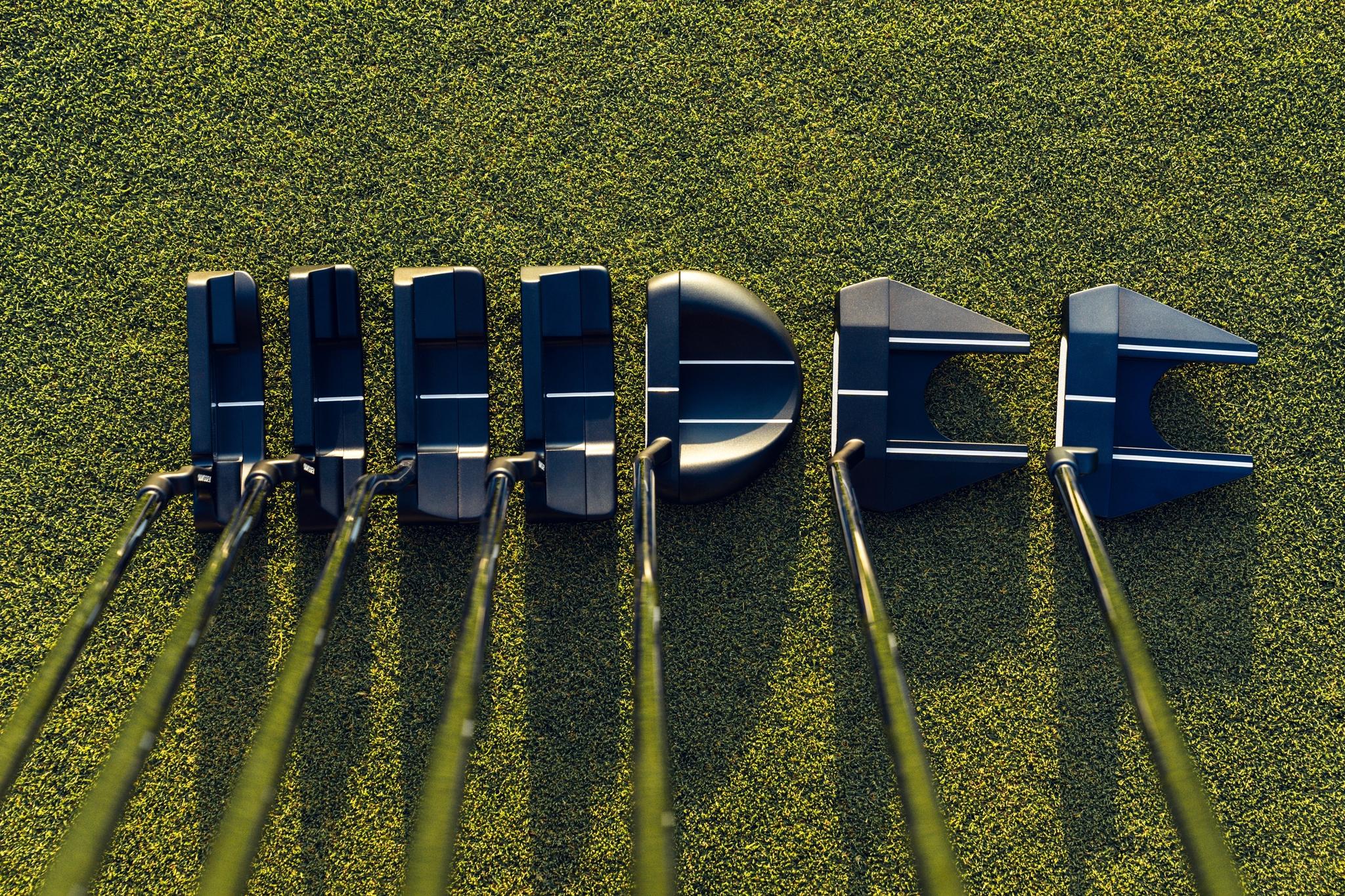
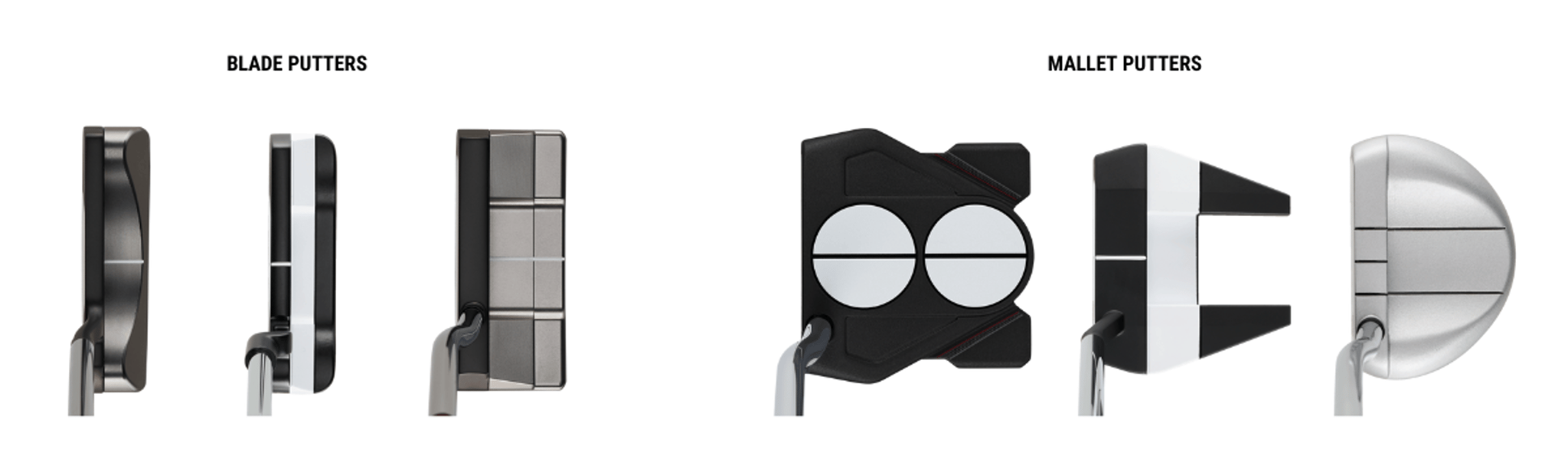
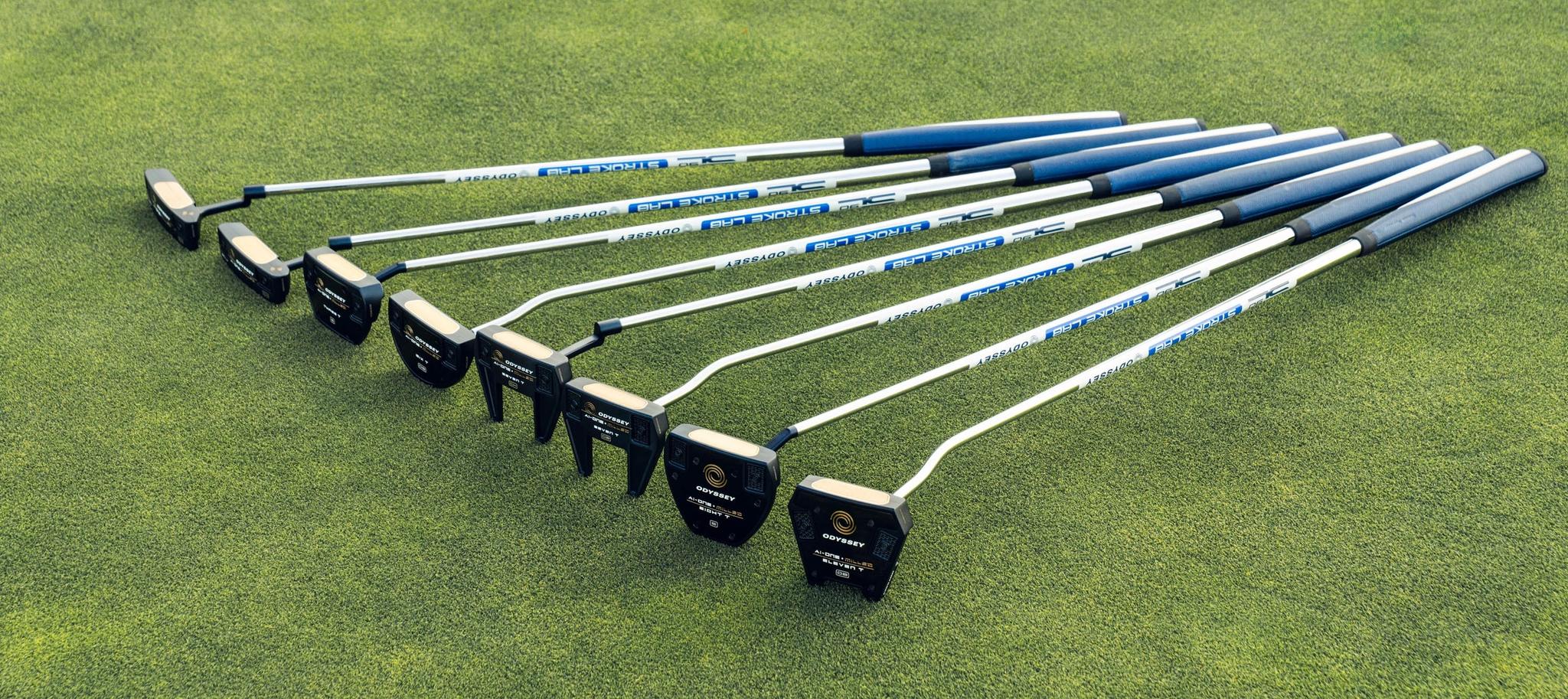
Before shopping for a new putter, it is important to understand the components that make up the various types of putters and how they will impact your performance on the course. A standard putter is made up of several parts including head, club face, hosel, shaft and grip. Different types of putters are commonly categorized by the club head design. The two most notable types of putters on the market include blade putters and mallet putters.
BLADE PUTTERS
Named for their flat, straight, and thin blade-like shape, blade putters are popular among golfers. The traditional, smaller club head allows golfers to feel the direct impact of the golf ball, enabling them to make adjustments to their stroke as needed. Blade putters are suitable for golfers with a consistent and repeatable stroke who want to prioritize precision and control on the green.
MALLET PUTTERS
Mallet putters generally feature a larger and more complex club head design than blade putters. One of the main advantages of using a mallet putter is the increased stability and forgiveness that it can provide. The perimeter weighting helps to distribute the weight around the club head, resulting in more consistent ball speed and accuracy on off-center hits. Mallet putters also offer a wider range of alignment aids which can help golfers line up putts with more precision. Golfers looking for greater consistency, balance and alignment on the green will benefit from using a mallet putter.
PUTTER CLUB FACE
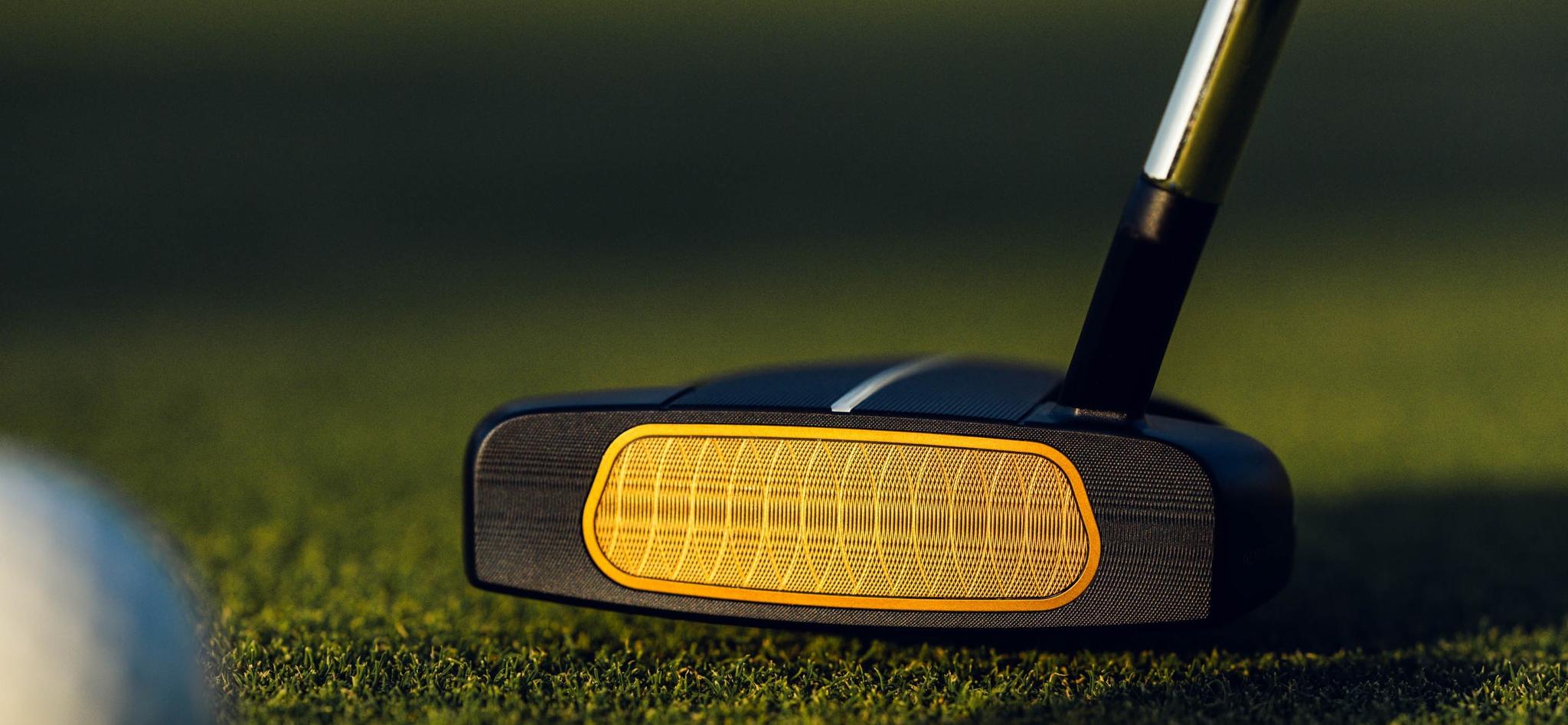
Another important factor to consider when buying a putter is the club face. The type of club face material and design can impact the amount of spin and launch on the ball, as well as the overall consistency of ball speed and direction. Putters will typically feature either a milled club face or an insert.
MILLED PUTTERS
Milled putters have a club face that is made from a solid piece of metal that has been precision-milled, offering a firm feel and consistent roll. The precision-milled grooves help ensure optimal topspin on impact resulting in greater consistency and distance control. Milled putters are an excellent option for golfers who prefer a firmer feel and more feedback on their putts.
PUTTER HOSELS
The hosel is the part of the putter that connects the club head to the shaft. A hosel will determine the putter’s offset, meaning the horizontal distance between the center of the shaft and the clubface.
FACE BALANCED VS TOE-HANG
If the putter face is set back from the hosel, the putter has what is called "toe-hang." If the face is directly in line with the hosel, the putter has no offset, also known as "face balanced”.
Putter offset can affect the way a putter feels and performs. Generally, a putter with more offset (toe-hang) will tend to rotate more during the putting stroke, while a putter with less offset (face balanced) will tend to stay more stable. The right amount of offset for a golfer will depend on their specific putting stroke.
TYPES OF PUTTER HOSELS
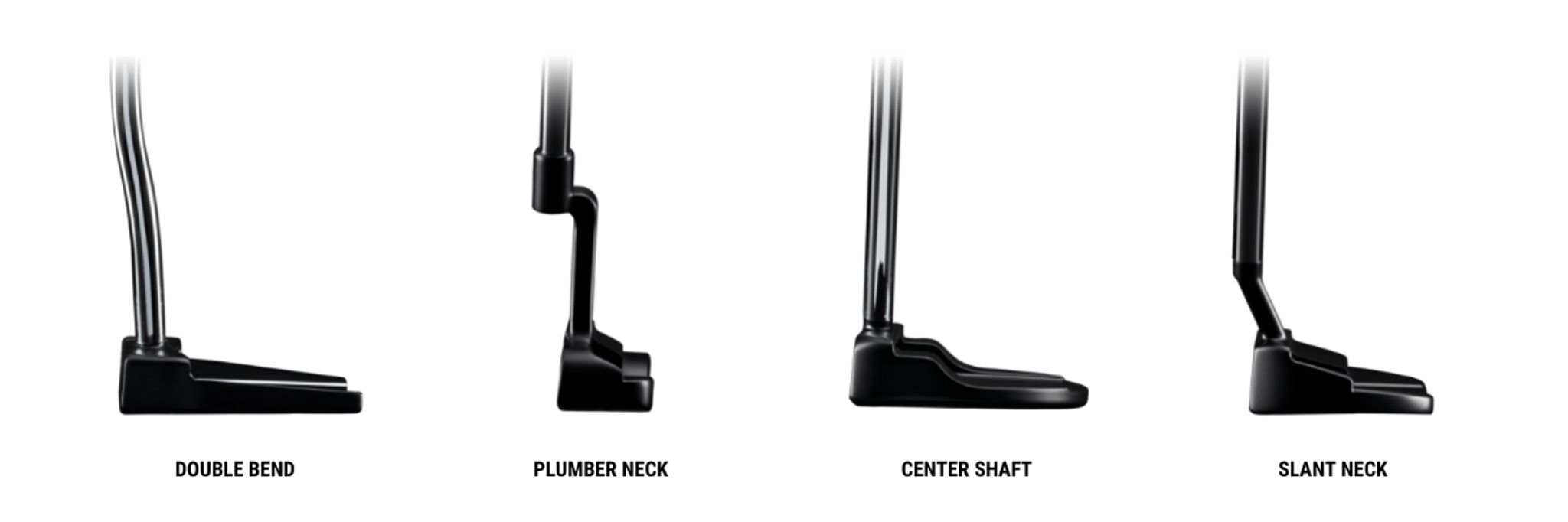
There are several different variations and types of hosels, each designed to complement specific putting styles.
DOUBLE BEND (S-BEND)
Double bend, also referred to as DB or S-bend, describes a shaft with a slight S-shaped curve. The shaft is most commonly inserted directly into the club head or utilizes a short hosel attachment, offering golfers minimal rotation throughout the putt. Recommended for golfers with little to no arc in their putting stroke.
PLUMBER NECK (L-NECK)
A plumber neck hosel features a distinct L-shaped design, resembling the shape of a plumbing pipe. The hosel attaches the shaft at an angle, moving the center of gravity slightly forward and creating “toe-hang”. Crank neck hosels share a similar angled design and the name is commonly used interchangeably with plumber neck despite slight variations in offset. Recommended for golfers with a slight arcing or straight putting strokes.
CENTER SHAFT
Center shaft describes putters with a straight shaft that is attached directly in-between the heel and toe of the club head. This design creates the most “face-balanced” putter, meaning the center of gravity is located directly beneath the shaft, keeping the club face square to the target line throughout the stroke. Recommended for golfers with a consistent straight-back and straight-through putting stroke.
SLANT NECK
Similar to the plumber neck, a standard slant neck hosel attachment is designed to attach the shaft to the putter head at an angle. The angle of slant neck hosels vary from subtle to more pronounced, offering different amounts of toe hang. Recommended for golfers with moderate arc shaped putting strokes.
PUTTER LENGTH
Putter length is another key factor to consider when shopping for a new putter. A putter’s length will directly affect a golfer's posture, alignment, and stroke mechanics. The standard putter length for men is typically around 33-35 inches, while the standard length for women is typically around 33-34 inches. With that being said, the exact appropriate putter length will vary depending on a golfer's height, arm length, and putting style.
HOW TO DETERMINE PUTTER LENGTH
Golfers without access to a professional club fitter can estimate what putter length is best for them by following the general guidelines below.
Stand up straight with your arms at your side and have someone measure your height from the ground to your wrist. Wearing your golf shoes will yield a more precise measurement.
Subtract two inches from your wrist height measurement to determine your baseline putter length.
Starting with a putter at your baseline length, test out different putters and adjust the length up or down in one inch (or half-inch) increments to see which length feels the most comfortable and natural for your putting stroke.
If possible, test your putter length on a putting green or with a putting mat to evaluate your alignment, stroke mechanics, and overall comfort with the length.
Ultimately, putter length is a personal preference, and what works for one golfer may not work for another. Experiment with different lengths or schedule a fitting with a reputable retailer or fitter to best determine the putter length that will best suit your individual needs.
GRIPS
As the only point of contact between a golfer’s hands and the putter, choosing the right grip is critical. The putter grip a golfer chooses can affect their putting performance, as different grips can impact feel, feedback and control. The types of putter grips can vary depending on the manufacturer but most grips will fall under one of the following categories.
STANDARD GRIPS
Standard putter grips are generally 1 inch in diameter and feature either a circle or oval shape. The thin design of the standard putter grip allows for maximum feedback and improved club control.
OVERSIZED GRIPS
Oversized putter grips, also referred to as jumbo grips, come in a wide range of different sizes designed to reduce wrist movement and promote a smoother putt. Golfers looking for a more consistent putting stroke may prefer the extra weight and stability offered by an oversized putter grip.
PISTOL GRIPS
Pistol putter grips feature a narrow top portion that gradually widens towards the bottom of the club, resembling the shape of a pistol handle. The ergonomic pistol grip design helps golfers maintain consistent grip pressure and reduces wrist action during the putting stroke.
FLAT GRIPS
Flat grip describes a putter grip that has at least one flat side. Similar to oversized grips, flat grip putters come in a variety of different sizes and styles. These grips generally feature a flat top and/or flat sides, and are intended to help golfers align the putter face to the target line.
HOW TO BUY A PUTTER THAT’S RIGHT FOR YOU
Your putter can mean the difference between a good round and a great round of golf. Before adding a new putter to your bag, you should always factor in which club head design, club face, hosel, shaft length and grip are going to improve your putting performance. It is essential to test out different types of putters to find the one that best suits your playstyle.
Now that you’ve learned about what goes into buying a putter and the decisions that are in play, it’s time to pick the one that’s best for you.
Whether you're looking to buy a new or pre-owned putter, Callaway offers a wide selection of golf clubs, guaranteed to fit any play style. For more help, check out our online putter selector tool for expert recommendations to improve your game.


